ServicesGutters
Gutter Replacement and Repair in Williamsport, OH
Your gutters have one job: catch roof runoff and move it somewhere harmless. We hang new gutters and fix tired ones, matching the size to the roof that feeds them, fastening into sound wood and setting a slope that keeps water heading for the downspouts instead of over the edge.
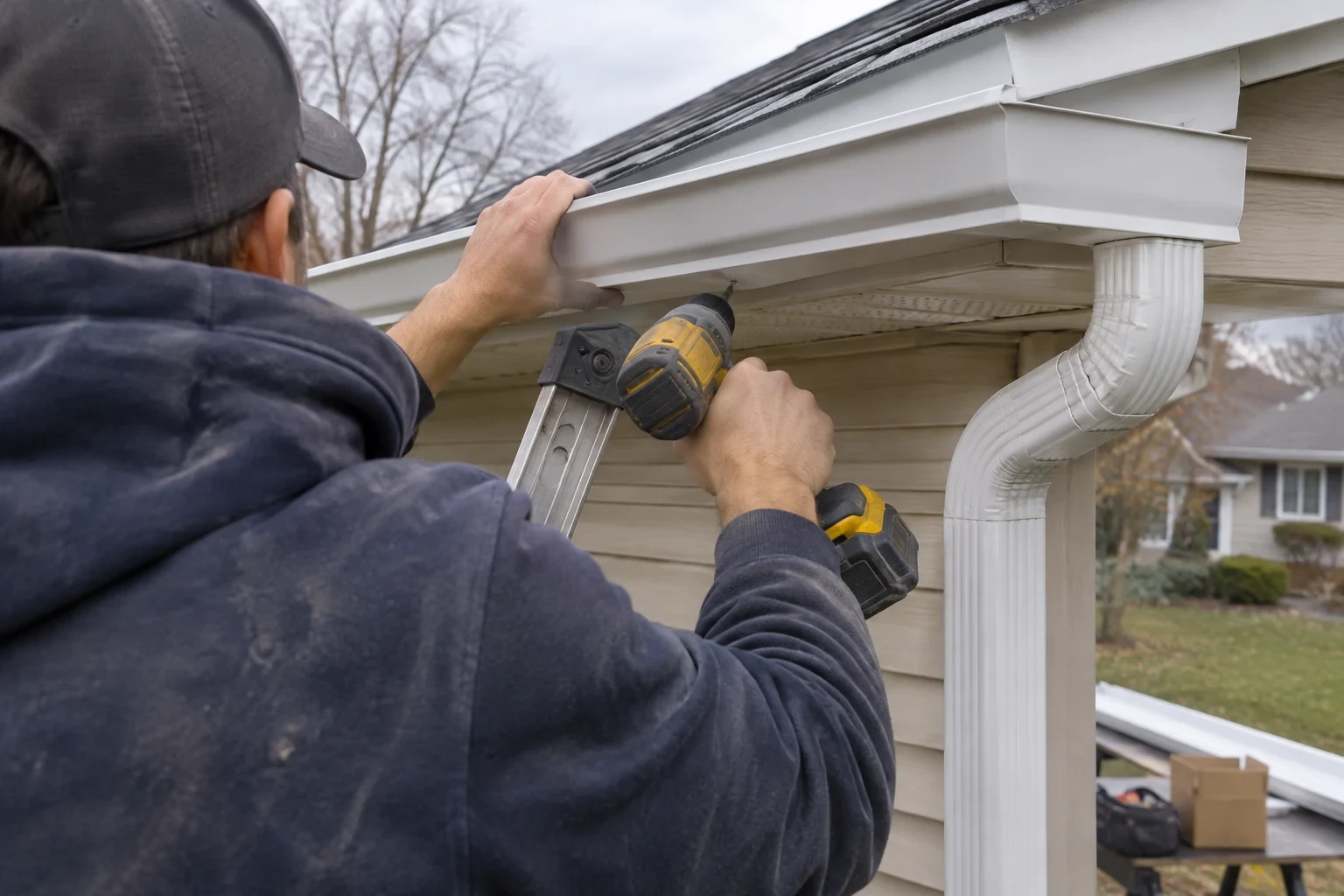
Why the edge of your roof matters
Every inch of rain that lands on your roof runs toward the eaves. If the gutters there are packed with leaves, too narrow for the roof above or tilted the wrong way, the water pours over the lip. It soaks into the fascia, streaks the trim and settles in the soil right against your foundation. Left alone, that leads to rotted wood at the roof line and a basement that stays damp.
Central Ohio winters make it worse. A gutter that holds water after a thaw freezes solid overnight, and the weight of that ice pulls hangers loose and pries seams apart. That is why we never look at the gutter alone. We also check the roof edge, the wood the gutter fastens to and where each downspout lets the water out.
Some gutters only need a handful of fresh fasteners and one corner sealed again. Others are past saving and should be replaced end to end. We will show you what we found and explain which way makes sense for your home.
What we handle on a gutter job
- Aluminum gutters formed on site
- We roll each gutter from a coil right at your home and cut it to fit the wall it will hang on. That leaves joints only where a run turns or drops into a downspout, so there is much less sealant to wear out. The profile we pick depends on how much roof drains into that stretch.
- Downspouts that share the load
- We space outlets so one downspout is not stuck handling half the roof. At the bottom, an extension or splash block moves the water out into the yard rather than letting it pool against the wall.
- Close hanger spacing and a steady slope
- Every hanger is driven into firm wood, set close enough to carry a full gutter. Each run tilts slightly toward its outlet so water keeps flowing rather than settling in the trough.
- Fixes for the gutters you have
- Drippy corners, end caps that have let go, sagging spans and flattened downspouts are often repairable on their own, with no need for a full replacement.
- A check of the board behind
- We press on the fascia before hanging anything new. If the wood is going soft, we lay out your options, and the Soffit and Fascia page goes into that repair in more depth.
- Leaf guards where they earn their keep
- For houses under big trees, guards can cut down on clogs. We will give you a realistic picture of how much cleaning they save and what maintenance remains.
How to tell your gutters need work
Overflow in ordinary rain
Water pouring off the front lip during a routine shower means the gutter is blocked, too small for the roof or pitched backward.
A gutter that dips or leans
Low spots between hangers, or a run tipping away from the house, tell you water is sitting in it and the fasteners are giving way.
Streaked or peeling trim
Dark lines or flaking paint below the gutter usually point to leaky joints or water slipping behind the gutter onto the wood.
Erosion along the house
Mulch washed out, little trenches in the soil or standing puddles near the wall mean downspouts are too short or the gutter is spilling before it gets there.
Basement moisture after storms
Dampness that appears only after heavy rain is often roof water landing right next to the foundation.
Thick ice at the eaves
Gutters loaded with ice on winter mornings often signal water that is not draining. The weight also bends hangers and opens joints.
What shapes the price of a gutter job
No two houses have the same rooflines, so we measure before we put a number on anything. The estimate you get is broken out item by item. We go over each line with you, and you decide what to do on your own time.
Total footage and turns
The number of feet along your eaves sets the starting point. Each corner, inside or out, adds parts and time to fit it properly.
Profile size and downspout count
A wider gutter or an added downspout costs more up front. On a large or steep roof plane, that extra capacity is usually what ends the overflow.
How high and how reachable
Second-story eaves, steep pitches and crowded flower beds mean more ladder moves and careful setup, and that labor shows in the quote.
Wood repair behind the gutter
Soft or rotted fascia has to be fixed before anything new can hang on it. When that is needed, it appears as a separate line so you can see exactly what it adds.
Optional add-ons
Leaf guards, longer downspout extensions and splash blocks are your choice. Each one is priced on its own line, so you can add or skip them.
What to expect, start to finish
- 1
You call, we come measure
Tell us over the phone what you have been noticing. Then we visit to measure every run, check the slope and the fascia, and see where the water ends up now.
- 2
Your estimate in writing
We list gutter size, downspouts, any board repair and hauling off the old system on separate lines. What you approve is what the job includes.
- 3
The work day
Most houses take a single day. We remove the old gutters, repair any soft wood behind them, form the new runs on site and hang each one at the proper tilt.
- 4
Testing and tidying up
A hose run through each section shows us the water reaches the downspouts and drains out. We load up the old metal, sweep the yard for screws and scraps, and walk around the house with you before we leave.
Common gutter questions
Should I replace my gutters when I get a new roof?
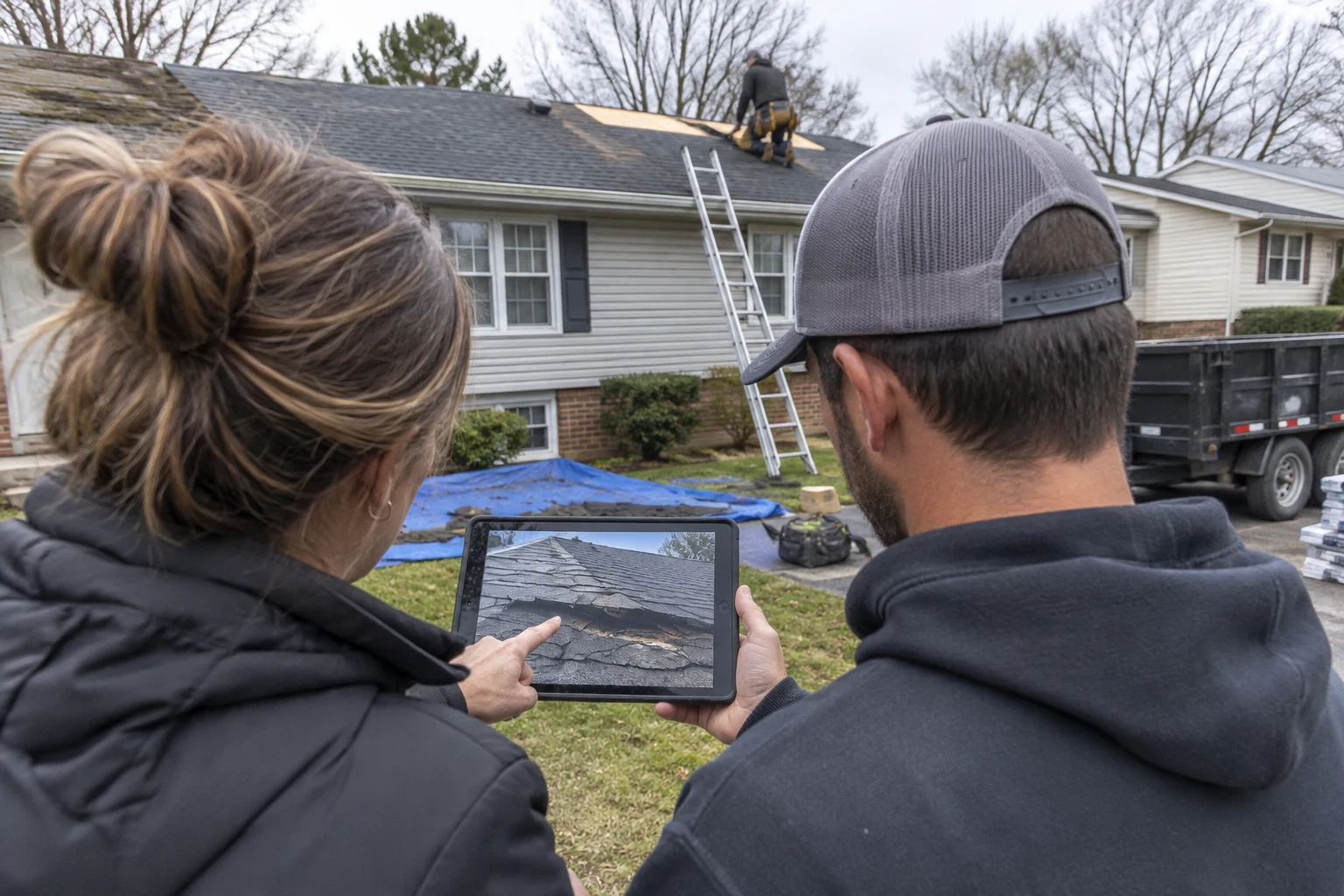
It's often the right time. Replacing a roof usually means removing the old gutters regardless, and new ones can be lined up with the new drip edge while the edge is open. If yours still have plenty of life, we can put them back up and we'll say so directly.
Are gutters formed in one piece better than the sectional kind?
On most homes, yes. Sectional gutters connect every few feet, and each connection depends on sealant that dries and begins to leak. A run made on site to the full length of the wall has joints only at corners and outlets, so there are far fewer places to fail.
If I add gutter guards, am I done cleaning for good?
Not entirely. Guards keep out leaves, twigs and most larger debris, but shingle granules and small seeds can still collect on top or slip through. Under heavy trees they cut down on a lot of ladder climbs. If few trees stand near your house, we'll tell you guards may not pay off.
Can my existing gutters be repaired?
In many cases, yes. We often reseal dripping corners, add hangers to fix sagging, re-pitch a run that has lost its slope and replace a flattened downspout. If the metal is bent, cracked or rusted through, we'll explain why a new run is the better use of your money.
Do you take gutter jobs outside Williamsport?
Yes. Our crews cover Circleville, Ashville, South Bloomfield, Commercial Point, Chillicothe and Washington Court House. Call us and we'll pick a day to come out and measure.
Ready to fix where your rainwater goes
Describe what you notice along the eaves during a rain, and we will find a time to come out, measure and look things over. You will see everything in writing, along with our honest take on whether a repair will hold or a new system makes more sense.