ServicesRoof Repair
Roof Repair in Williamsport
Water spots on a bedroom ceiling or shingle pieces on the lawn rarely call for a whole new roof. We find where the water really enters, photograph the damage for you and repair the part that failed, keeping your home dry without work you never needed.
Fixing Leaks Where They Actually Start
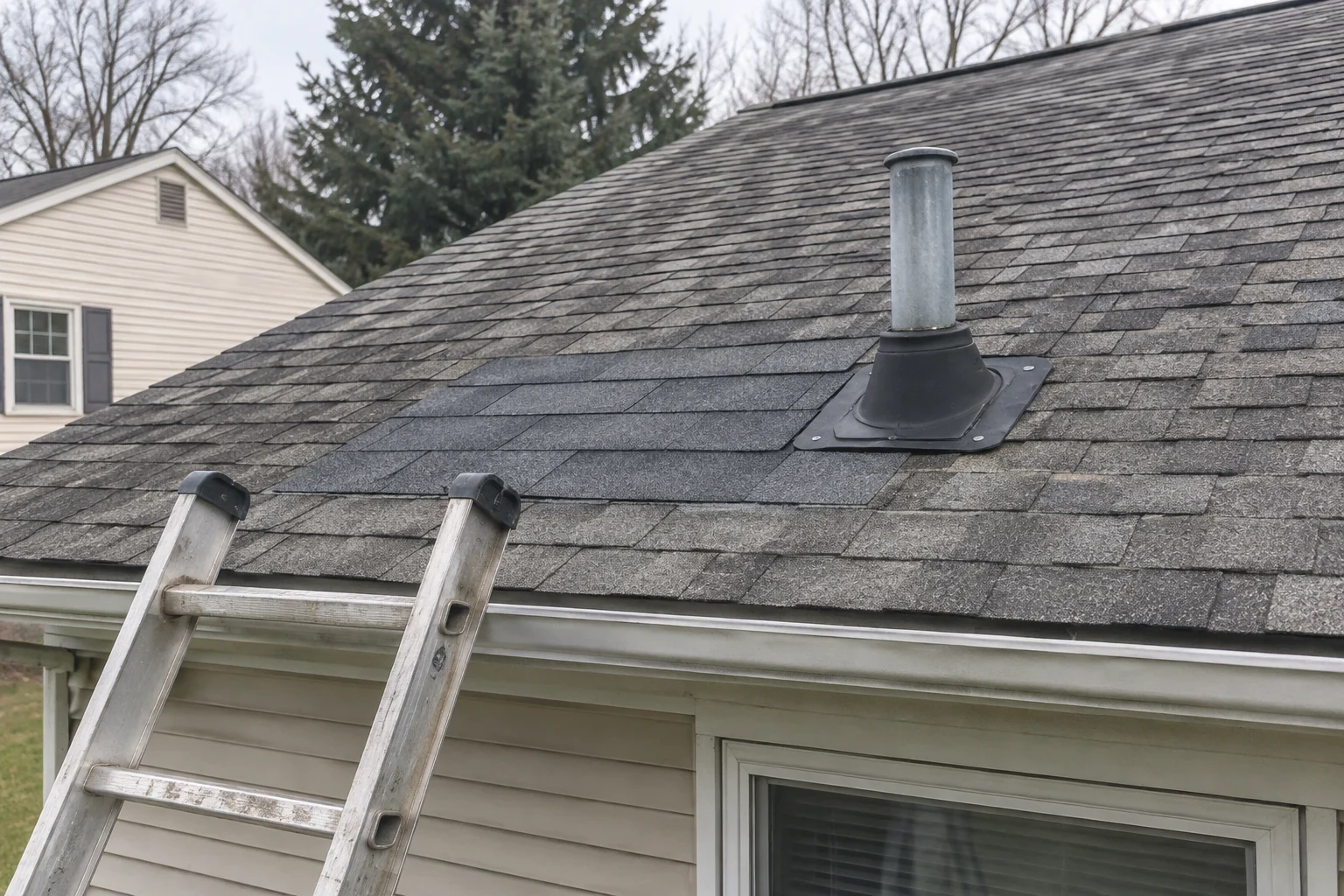
A leak seldom shows up directly under the spot where water gets in. It slips beneath a lifted shingle or around a cracked pipe boot, runs along the decking or a rafter, and only then reaches the drywall. Patching the stain alone usually means the leak comes back. We trace that path uphill to where the water really enters.
A targeted repair usually makes sense when the damage is contained and the remaining shingles have years of life left. Examples include flashing that has pulled loose, a few shingles lost to strong wind, or a rubber pipe boot that dried out and cracked. If the roof is worn out overall, we say so directly and walk you through what roof replacement would mean, so you decide with all the facts.
Freeze and thaw cycles in central Ohio exploit every weak spot. Water gets into a gap, freezes, expands and widens it, so a tiny opening in October may be leaking by spring. Catching it early usually keeps the repair small.
What's Part of a Repair Visit
- Finding the entry point
- When the attic is reachable, we start there and look for darkened decking, wet insulation and light showing around pipes and vents. What we spot inside tells us where to look on the shingles overhead.
- Shingle replacement
- Neighboring shingles are lifted with care so damaged or missing ones can be swapped out and sealed. We match color and profile as closely as today's products allow, and if the match will be off, you'll see a sample beforehand.
- Flashing repair
- The metal at chimneys, sidewalls and valleys is where many roofs give way. Loose, rusted or badly sealed pieces get reset or replaced, not covered with a smear of roof cement.
- Pipe boots and vent seals
- The rubber collars around plumbing pipes harden and split as they age through hot summers and cold winters. We put in new ones and reseal exhaust vents and other openings that have let go.
- Decking check
- Anywhere water has been coming through, we test the boards underfoot and look at them from the attic side. Rotted or spongy sections are replaced before shingles go back down, and you'll get photos before that happens.
When Your Roof Is Asking for a Repair
Ceiling or wall stains
Tan or brown rings, or paint that blisters after a storm or a snowmelt, show that water is making it inside your home.
Shingle pieces on the ground
Bits of shingle on the lawn or in the gutters mean something up top has let go. That bare spot is an opening for the next rain.
Heavy granule loss
Some grit washing out of the downspouts is expected. Large piles, or dark bald areas on the shingles, mean the surface is wearing thin in spots.
Ice buildup at the eaves
Thick ridges of ice along the roof edge can push meltwater back under the shingles. Leaks that appear during a thaw point to the eaves.
A damp or musty attic
Soggy insulation, frosted nail tips in winter or a stale smell can mean a slow leak or a ventilation issue worth checking.
Curling or cracking
A handful of curled shingles is an easy swap. Curling across most of the roof usually means it's close to worn out.
What Moves the Price of a Roof Repair
We don't put a number on a repair until we've seen the damage in person. The written estimate breaks the work into separate lines for materials and labor, so you know what you're paying for before we start. These are the factors that change the total the most.
How far the damage reaches
Swapping out a few shingles goes quickly. A leak that has worked its way down a valley or under several courses needs more material and more hours.
The condition of the decking
Boards that have soaked up water have to be cut out and replaced. Sometimes that only shows once the shingles come up, so we'll phone you before taking on any added work.
Pitch and access
A steep slope, a two-story wall or a tight spot under trees calls for extra safety setup, and that adds labor time.
Chimney and wall flashing
Rebuilding the metal around a chimney or along a wall takes more steps than replacing shingles. New flashing sometimes has to be bent on site to fit.
Finding matching materials
Popular shingles are easy to get. Discontinued lines or specialty products can take longer to track down and cost more.
What to Expect From Start to Finish
- 1
A quick phone conversation
Let us know what you've noticed and where. We'll ask when the leak tends to appear, then pick a time to come see it.
- 2
On the roof and in the attic
We check the shingles up close and look from inside if the attic can be reached. You'll get photos of each trouble spot and our honest opinion on whether a repair will last.
- 3
A line-item estimate
Your written estimate breaks out materials and labor. If replacement looks like the better value, we'll explain our reasons, and the decision stays with you.
- 4
The repair itself
We cover plants and the areas around your home, complete the work and look it over before we come down. Most repairs wrap up in one visit.
- 5
Cleanup and final photos
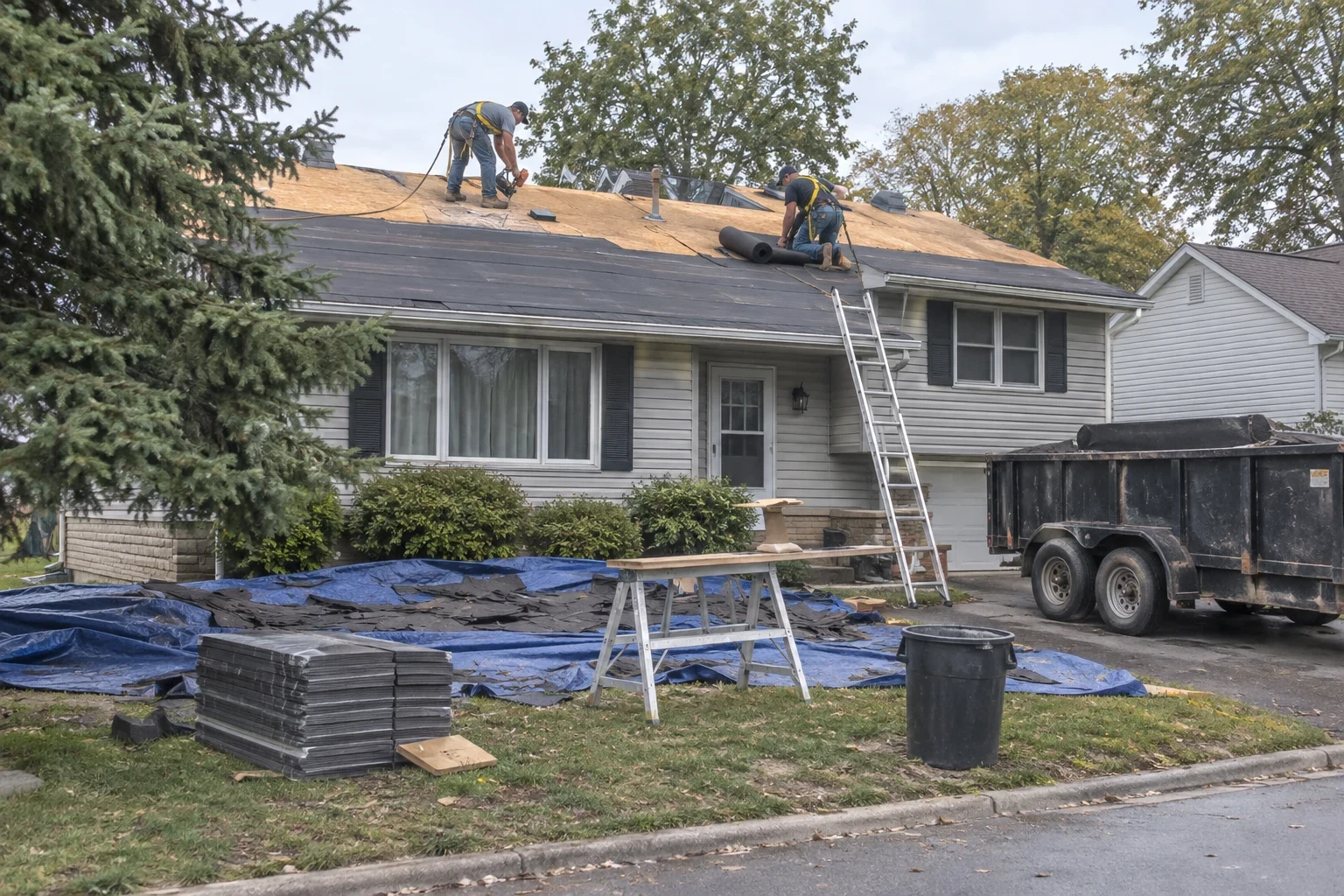
Old shingles, nails and debris get hauled off, a magnet sweeps the lawn and driveway, and you see pictures of the finished work.
Common Roof Repair Questions
Can you fix just the leak, or will I need a whole new roof?
In most cases a leak can be repaired by itself. We suggest roof replacement only when the shingles have aged out everywhere or the damage covers a large area. You'll see the photos and hear our reasons before you make any decision.
Will the new shingles match my roof?
We come as close as today's products allow. Sun fades a roof over the years, so even the identical shingle may look a little different at first. If we can't get a close match, we'll show you a sample before any work starts.
Can you repair a roof in winter?
Often, yes. Shingles bond best when it's warm, so on cold days we seal the tabs down by hand. We stay off roofs that are icy or covered in snow, since that isn't safe.
Why does my roof only leak sometimes?
Certain leaks appear only when rain blows in from one direction, or when snow melts and refreezes along the eaves. That timing is a helpful clue. Tell us when you see it, and we'll know where to focus.
Does someone need to be home?
It helps for the first visit, because tracing a leak usually means getting into the attic. On repair day, most homeowners just leave the driveway open for our truck.
Can you look at my gutters while you're up there?
If clogged or sagging gutters are adding to the problem, we'll point it out and photograph it. We also handle gutters and soffit and fascia work, so that can be checked during the same visit.
Ready to Get Your Roof Dry Again
Let us know what's going on up there and we'll schedule a visit. You'll come away with photos, a clear estimate and an honest take on what your roof needs.